.png)

FDNA
From AI Lab to Household Name: How We Helped FDNA Reach Parents at Scale
Performance Snapshot
18x
More Social Engagement
10k+
Core Platform Pages visited per month
32
Average New Opportunities Every Month

The Client
FDNA is an AI company that detects disease-causing genetic variations by analyzing physiological patterns. Work that has, until recently, lived primarily in clinical and research settings. They partnered with us to bring their platform to a consumer audience, making advanced genetic diagnostics accessible to the people who need it most: parents searching for answers.
The Challenge
FDNA's challenge wasn't just to build a new website, it was to build a new audience. A platform designed for clinicians and researchers needed to become a trusted resource for parents navigating difficult moments. That meant earning visibility, credibility, and trust in a space where families search desperately for answers.
Emboodo Approach
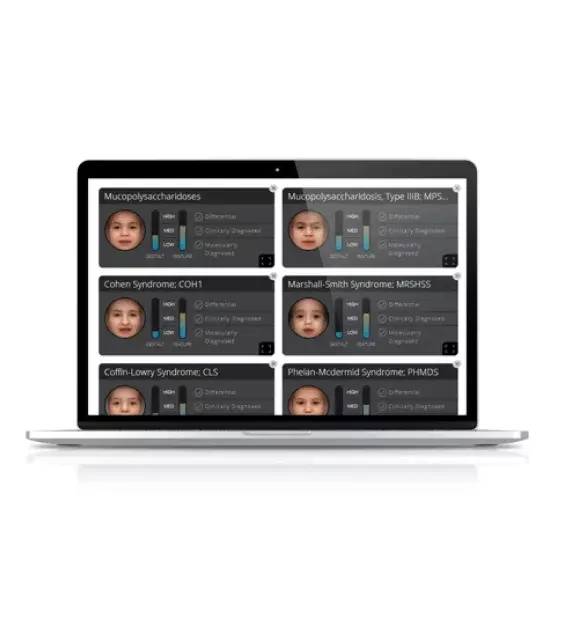
We built FDNA's consumer presence from the ground up, combining a scalable SEO + GEO architecture with content designed to meet parents at every stage of their search. Thousands of syndrome and symptom pages built to capture high-intent traffic across organic and AI search. Long-form walkthroughs to explain the technology and earn trust. We developed a brand experience designed to help parents better understand FDNA's product and technology.
From Research Tool to Trusted Resource
In just over a year, FDNA went from invisible to indispensable. The site grew from zero to 48K monthly organic sessions, social engagement climbed 18x, and the brand surfaced consistently across both traditional and AI-powered search. Most importantly, the platform became something it had never been before: a resource families could find, understand, and trust at one of the most uncertain moments of their lives.
Lorem Ipsum is simply dummy text of the printing and typesetting industry.
Name - Role
Our Process
01
Jonathan Ganor
SEO Manager
Content Strategy
FDNA's product touches more than 7,000 genetic syndromes, each with its own search demand, its own family of related symptoms, and its own audience searching for answers.
We mapped a scalable SEO and GEO architecture designed to capture high-intent traffic across every relevant syndrome and symptom and paired it with a content strategy built for parents. Educational, accessible, and trust-building, designed to meet families at the moment they needed answers.


02
Kaleigh Conroy
Organic Growth Specialist
Content Research
We prioritized the highest-search-volume syndromes first, then expanded systematically, building dedicated pages for each, organizing related symptoms into clean clusters, and creating long-form blog content to walk parents through the technology in plain language.
Every page was structured to compete in traditional search and in AI-powered answers, ensuring FDNA would surface wherever parents were looking - Google, ChatGPT, or otherwise.


03
Daniel Farangian
Head of Content Distribution
Content Implementation
A scalable content strategy is only as good as the system behind it. We built an implementation workflow that allowed FDNA to continuously publish, optimize, and expand, adding new syndromes and symptoms as they were identified, refining existing pages based on performance data, and keeping the architecture clean as the site grew.
By the end of the project, FDNA had a content engine running at a scale and a digital presence that grew alongside the company's mission.